One, a manufacturer can do what it wants.

Second, lighting, camera angles, background can impose perceptual differences. Not saying that's a reason here, just an observation.
Once I get the knife in my hot little hands, I'll be able to review/comment on any differences based on actual examination/comparison.
Third, the 1941 version was being made by different grinders that the 1978+ versions - different people >>> differences.
Fourth, different stamp die used to stamp out the blanks and the die maker/designer decided to tweak it, or misinterpreted a line drawing, but it was "good enough" and no reason to pay to change it.
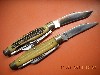
Fifth, the 1941 knife, as seen in the picture has been used and resharpened a few times in its 77 year life span. It was bought just before WW2 started or shortly the start. Civilian purchase of knives, while spottily available during the war, were curtailed. And it was bought to be used, not just sit around in a drawer, so the profile/grind could have changed over time due to end user sharpening techniques & tools. How many times have we seen people buy a brand new knife and commence to "making it their own" by changing the grind from FFG to convex, convex to flat, sabering flattened out, choils added, handles changed out, etc.
I have a Kabar 1254 shorty tanto that "almost, kinda" looks like a bad clip point because I can't sharpen a tanto edge for squat and I use that little tanto point damn near daily as a box/tape cutter. Anyone looking at it 50 years from now will say
"WTF??? Why/when did Kabar make those??"