Mel - yes the flies were patterns that were published in books from the 1800s. I tie them on hooks from the same time period but in fact the silk gut and metal tinsel used is also from the late 1800s/early 1900s... sometimes the feathers as well are very old... here it is no different than the current ivory story for knives - many exotic birds are now considered off limits and possession of "some" - not all - of the feathers is illegal unless you have provenance that they were from a taxidermy mount. In fact did anyone know that even picking up a song bird feather found on the ground in the woods is illegal? Anyway - I also collect old flies and usually those in good condition which I display at shows are confused for my flies also on display.... For those antique flies not in good condition we sometimes "dissect" them to determine old tying techniques - actually quite interesting)... sometimes folks ask me at shows if I tied them or are they original... that is what I shoot for in the end... I also sell these flies framed - in handmade frames from the wood of the Adirondacks in NY state from my brother-n-law... of course I also tie many fishing flies but these old flies make the connection to the historical past for me (like knives ... but my primary stomping grounds for fly fishing is the saltwater for stripers, bluefish etc etc... something I started in the 1980s before it became a very popular venue...
Anyway - glad to bring back some memories for you Mel - fishing is a great outdoor sport in this country and has been for many years - I have met or taken very few young ones who don't enjoy fishing - for bluegills or whatever ... even in Lyle's post on Knife Lore about the Lick Creek farmer's jack Lyle spoke of fishing the creek with his family... fishing is part of our American heritage for many... how many photos have you seen with kids catching their first fish with huge grins on their faces - many and to me that is priceless!
Folks bring me feathers as well very often ... however in many cases for the flies I generally tie I need the matching feathers from each side of the bird to have a symmetrical pair... anybody bird hunt out there?? Particularly ducks?? I can always use duck feathers ... or turkey... I am only asking for those legal species we are able to use..
Sorry to go on - I can get carried away with this stuff - like I can with knives these days - though I am not yet anywhere near as versed in knives... but am trying and learning !!
Great question on the colors Mason - the old books were hand illustrated for the most part in color - some were lithographs... so one depended upon the artists interpretation to some extent... however there are colors that are a matter of opinion - you ever hear of the color "puce" - almost a grayish pink but everybody's eye picks up colors differently. In truth I spent many hours at the American Museum of Fly Fishing in VT photographing and taking notes on many old flies (but 1st edition books which make knives look cheap from the 1800s are hard to come by though I have a few)... I particularly like the old gaudy wet flies of the late 1800s (in addition to the UK salmon flies) that were well published in 1893 by Mary Orvis Marbury here is the US - but her book has no pattern recipes - just illustrations and unless you have an early addition the flies are hard to decipher in terms of materials... so the museum has been great for me. My feature article in Fly Tyer magazine a few years ago where my flies made the cover were unknown patterns I brought to light after my research at the museum... lots of work - but as they say -a labor of love ...
Most were salmon flies as somebody asked - but some I posted were considered american bass flies of the late 1800s all based on the old salmon patterns but designed using feathers easily obtained here in the US and most from the millinery industry... amazing they tied those beautiful flies for bass but a great part of american fly fishing history!!
Best
Lee
____________________________________________________________________________
Lee
LongBlade wrote:Thanks Terry (sent you a note) and Mason
Great question on the colors Mason - the old books were hand illustrated for the most part in color - some were lithographs... so one depended upon the artists interpretation to some extent... however there are colors that are a matter of opinion - you ever hear of the color "puce" - almost a grayish pink but everybody's eye picks up colors differently.
Lee
Lee - I have had to deal with colors a lot, which is pretty weird because I am partly colorblind in the red green spectrum. Over several years I built a web site focused on wild flower identification with the flowers catagorised by color, among other things. I had computer programs that where I could paste my photo of a flower into the program and it would identify every color in the photo by area ... I had books that gave the color of the flowers ...I often had my daughter give me a human perspective ... surprisingly often none of the three agreed. So I can really understand your statement that there are colors that are a matter of opinion!
Great shot Charlie .... looking real good!! Nice background - not at all distracting and brings full attention to the knife!!
Mel - I can imagine being color blind no doubt presents some issues with color - at least some colors... to say the least... Basic colors are fairly easy to discern for most... but for me when old books speak of canary yellow vs golden yellow vs marigold yellow or scarlet red vs crimson red vs blood red, as examples, than it all becomes a matter of interpretation... truthfully our computer screens display color shades abit differently depending upon settings, etc etc... luckily for knives we don't rely as much on color unless it is celluloid where multiple colors exist ...
____________________________________________________________________________
Lee
Sasquach wrote:That Landenberger is a fine lookin' knife! I've been filling out my fixed blade collection lately but I still have mostly folders.
Here's my last attempt from the week end. I played with the lighting, focus, and background a little bit.
Charlie.....good stufff pal.
Now try....opening the knife full. Place tip in lower left of screen, end of handle in upper right, and get down on the blade tip and shoot from knife tip to butt. In other words get just above horizontal when you shoot.
Nice Scott .... I am digging those shots... I did the same sort of shots with my swayback pruners on a few photos and really like those angle shots... I call these magazine "cover" or advertising shots ... Cool stuff...
____________________________________________________________________________
Lee
Great work fellas, some fine lookin' pics. Here's a few I took today on a cloudy and drizzly walk in the woods....
The first shot was taken on a freshly fallen tree that was leaning against another tree at about a 60 degree angle. I cut a little notch into the soft wood and used that as a shelf to balance the knife on, and took the pic looking down towards the ground.
For the other two pics, I found this lone rock that was covered with bright green moss, it was on a wooded hillside, and everything around it was grey and brown, so it really stuck out visually. I thought it made a cool platform for some pics...
Attachments
Mike
There are those who are...and those who wish they were. He himself decides.
I-man - those red scales are so rich looking in color - very cool!! Like the last photo as well but the tip of master is just out of the photo...
Mike - all your shots are real nice but that last photo with the knife on the moss is awesome ... Those cloudy/rainy days (sorta like early or late day light) are great for knife photos IMHO... that light just enriches color and makes the reflection of blades not an issue..
____________________________________________________________________________
Lee
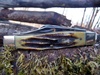
I was going through some pics I shot a while back and came across this one. I fits in with great outdoor shots you guys are posting. It turned out pretty good I think.
Attachments
A GOOD KNIFE IS LIKE A GOOD FRIEND, IT'LL NEVER LET YOU DOWN.
“Courage is being scared to death, but saddling up anyway.”
~ John Wayne ~
Has anybody ever used a flatbed scanner to capture images of knives? I read a thread in BF that talked about it but the postings were somewhat dated. I'm curious what I should look for if I was interested in going that route. I'm more concerned about a crisp, sharp and detailed image than I am of artistic impression.
bestgear wrote:Has anybody ever used a flatbed scanner to capture images of knives? I read a thread in BF that talked about it but the postings were somewhat dated. I'm curious what I should look for if I was interested in going that route. I'm more concerned about a crisp, sharp and detailed image than I am of artistic impression.
Any thoughts? Tom
Dale (orvet) used to do it quite a bit and someone else but I can't remember who. I tried it with my HP flatbed scanner (dedicated, not an all-in-one) and it didn't have the depth of field to produce good scans of knives.
Forged on the anvil of discipline.
The Few. The Proud.
Jerry D.
This country has become more about sub-groups than about it's unity as a nation.
"The #72 pattern has got to be pretty close to the perfect knife."
--T.J. Murphy 2012




... but my primary stomping grounds for fly fishing is the saltwater for stripers, bluefish etc etc... something I started in the 1980s before it became a very popular venue...





 ...
...



 .....
.....