


Here is a knife that I added to my collection recently.
This clasp knife really has me puzzled.
This one has been a real roller coaster of emotions since it arrived.
When I purchased it, I thought it was a WW1 9402/1917 pattern “Knives, Clasp with Tin Opener and Marline Spike with Fibre Scales”. This was one of the series of knives produced during WW1 that had only the blade and tin opener and were shorter by about 5/8" than the 6353/1905 and its variants.
On first examining the knife, I realised that it was a larger knife and was the same size as the 6353/1905. My heart sank, because I thought it must be a 6353/1905 pattern that had the marline spike removed.
 I was shocked at such a travesty as this would have been a much scarcer variant with jigged fibre scales.
Further examination revealed that this was not the case. The ends of the springs at the shackle end of the knife are the same as the smaller series of knives. This clearly establishes that this knife was made this way.

I then also realised that this was a US made knife as it is marked Simmons Keen Kutter St Louis. I have seen other examples of US made 6353/1905 pattern knives. So being US made was not a complete surprise but was unexpected!
So what have I got here??
It is defintely a 6353/1905 pattern produced with only a blade and tin opener.
During WW1 when the British also issued the smaller clasp knife with blade and tin opener, was this an American version of this knife?
The images below show the knife .
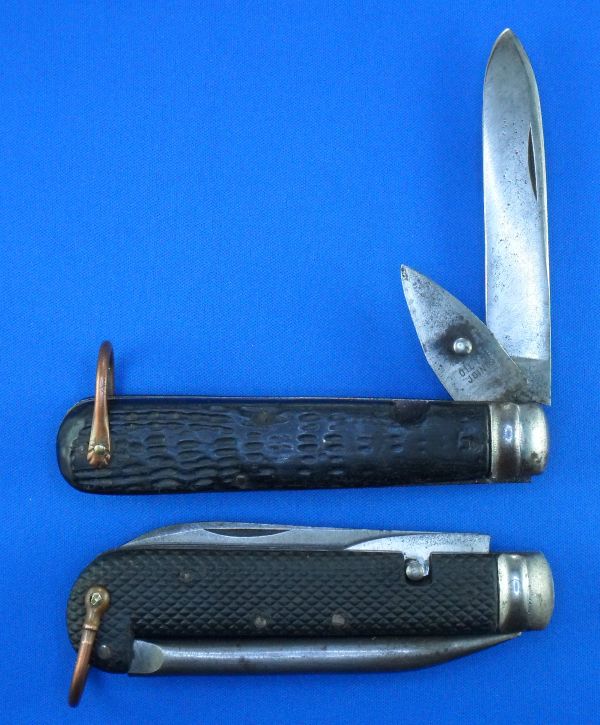
Compared alongside a 6353/1905
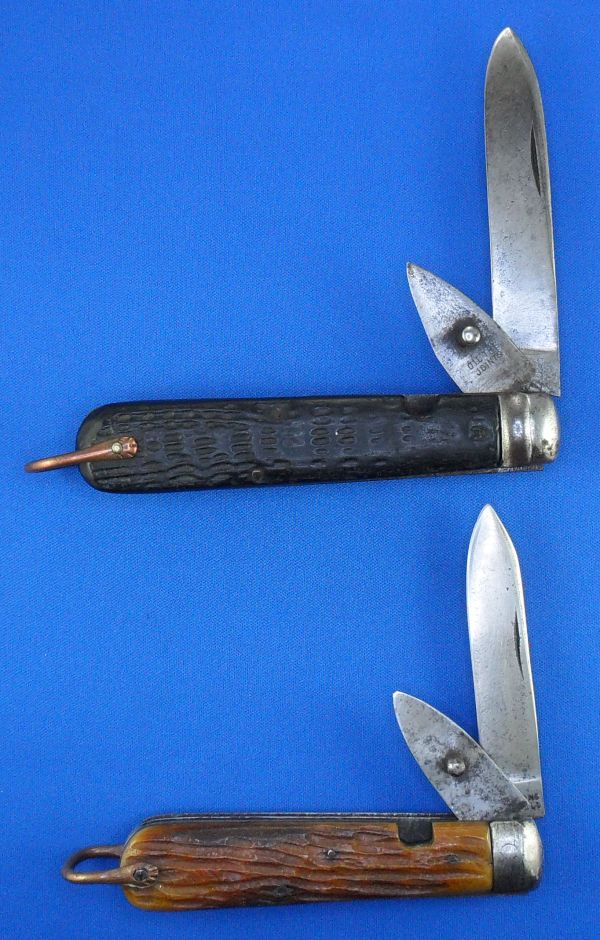
Compared against an 8173/1914
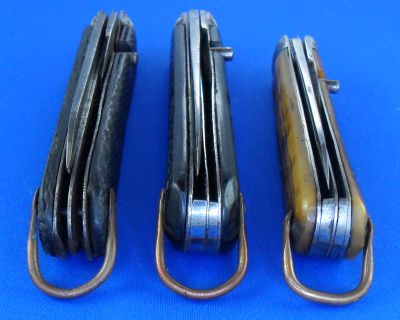
This image shows the shackle end of the knife. The knife on the LH side is a 6353/1905 that has had the marline spike removed. You can clearly see that it still has provision for the spike to hinge and rotate back. The Centre knife is the Keen Kutter mystery knife. You can clearly see that there is no provision for a marline spike. The RHS knife is the 8173/1915 featured in the previous image. Again, this knife does not have a marline spike or provision for one!
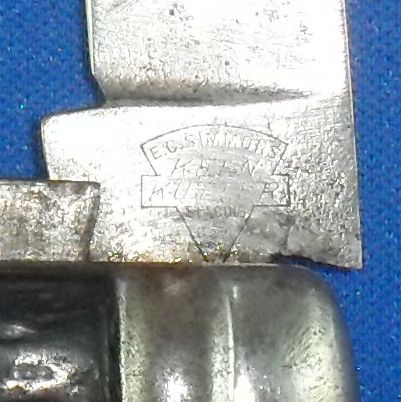
Keen Kutter makers mark
I hope you find this knife of interest and I am very interested to hear everyones comments on it.
I have asked about this knife in other forums and have not found out very much at all. I have found two similar examples but no one can provide me with much information.
Where does it fit in the Lexicon of knife history??
I would be grateful for any information.
Regards Dutchy




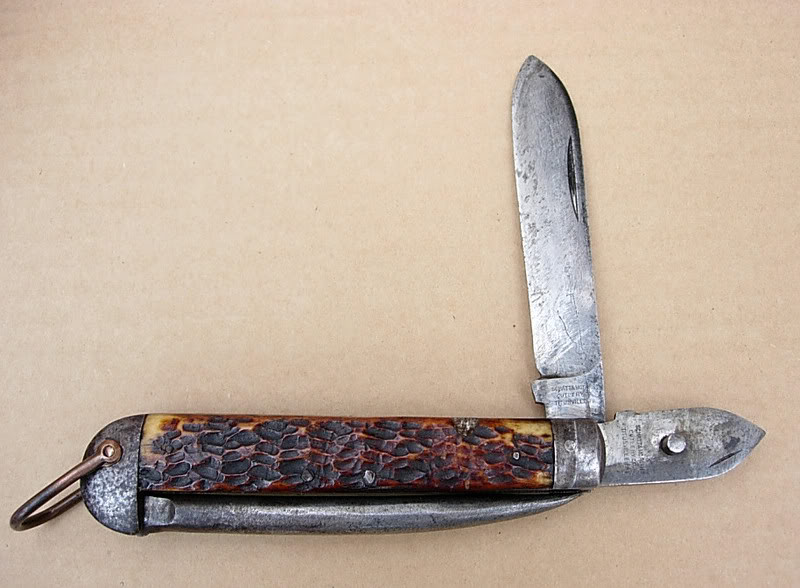


 This is the second pattern I've seen referred to as "Clasp Knife".