


 _____ I took the knife apart,and there is only one way to ""assemble"" it together***________ bolster and butt end have to match ??__one piece slides up,while the other slides down to connect the slots ***__the other one I have assembles the same way, but has a can opener at the butt end*****___ wonderin' what you see ????
The Red Cross Holley & Camillus Big Mistake Xmass Hobo Knife
-
big monk

- Bronze Tier

- Posts: 5718
- Joined: Thu Feb 18, 2010 1:53 am
- Location: Ninety Six,South Carolina
Re: The Red Cross Holley & Camillus Big Mistake Xmass Hobo K
????????____Hey Charlie,these are the first I have ever had or had my hands on ??? If they are wrong,this is the way,I received them and I can't see another way to assemble them ??? _____ I took the knife apart,and there is only one way to ""assemble"" it together***________ bolster and butt end have to match ??__one piece slides up,while the other slides down to connect the slots ***__the other one I have assembles the same way, but has a can opener at the butt end*****___ wonderin' what you see ????
_____ I took the knife apart,and there is only one way to ""assemble"" it together***________ bolster and butt end have to match ??__one piece slides up,while the other slides down to connect the slots ***__the other one I have assembles the same way, but has a can opener at the butt end*****___ wonderin' what you see ????- Attachments
-
-
-
-
-
-
I'm not young enough,____to know everything !!!!!!!!!!!!
MONK****
MONK****
-
Beechtree

- Posts: 910
- Joined: Fri May 04, 2012 8:17 pm
Re: EVER FIND YOURSELF WANTING ONE OF THESE? GOTTA BE WORTH
Charlie, I think what you might be thinking of is the Frary Camping knife By Frary & Son, which dates to the early 1880's. A very fine example with the etching is posted here http://www.allaboutpocketknives.com/kni ... 7&start=15RobesonsRme.com wrote:I think Holley and Landers, Frary & Clark actually made these during the American Civil War, although I do not think the knife in the OP is anywhere near that old.
LF&C did not start making knives until the teens. The type of slot knife I am familiar with as being Civil War vintage are like this... http://www.allaboutpocketknives.com/kni ... r&start=60.
I have seen them by a number of cutlery firms, including Ulster, Empire, and Northfield, ect. although not all date to the civil war. I am sure others firms made them as well.
That is a VERY fine example reddirtknives. Surely, the nicest I have seen.
Thanks for the information coffeecup, that is really neat to know. The idea of having a spoon/knife on the same non-detachable handle seems unpractical, and I wonder if the cutlers questioned its usability while they were making them.
"A tool is but an extension of a man's hand." -Henry Ward Beecher
-
knife7knut
- Posts: 10697
- Joined: Tue Nov 06, 2007 9:02 pm
- Location: Tecumseh,Michigan
Re: The Red Cross Holley & Camillus Big Mistake Xmass Hobo K
I would concur with Charlie;I don't know that got assembled like that second and third picture but it is not right. The second group of pics shows it assembled correctly.RobesonsRme.com wrote:That three piece Union is a beautiful knife, but I'm not at all sure you have assembled it correctly. I don't think I've ever noticed one of these with the knife blade opening out of the bottom of the assembled frame like that.
Charlie Noyes
Here is my Union Cutlery Co Dogshead slot knife with just a knife and fork blade.
- Attachments
-
- UCC0.jpg (41.86 KiB) Viewed 2476 times
Adventure BEFORE Dementia!
-
big monk
- Bronze Tier
- Posts: 5718
- Joined: Thu Feb 18, 2010 1:53 am
- Location: Ninety Six,South Carolina
Re: The Red Cross Holley & Camillus Big Mistake Xmass Hobo K
 ____ I see what you guys are talkin' about now !!! ___________ I never noticed-- the first set of photos was from the seller,that I bought the knives from*** ( they were easy to get to,is the reason I posted them first)----looks like he just stacked the three pieces on top of each other for the photo shoot ????____ thanks K7K.for explaining, cause I couldn't figure out what was wrong with the knife ????
PS___________Outstanding Kabar !!!
I'm not young enough,____to know everything !!!!!!!!!!!!
MONK****
MONK****
-
RobesonsRme.com

- Posts: 10129
- Joined: Wed Jan 28, 2009 3:44 pm
- Location: The Heart of Dixie.
- Contact:
Re: The Red Cross Holley & Camillus Big Mistake Xmass Hobo K
I misspoke when I stated LF&C. I sthink I should have said Lamson & Goodnow.
Charlie
Charlie
DE OPPRESSO LIBER
"...Men may spurn our appeals, reject our message, oppose our arguments, despise our persons ___but they are helpless against our prayers. "
Sidlow Baxter
"...Men may spurn our appeals, reject our message, oppose our arguments, despise our persons ___but they are helpless against our prayers. "
Sidlow Baxter
-
reddirtknives

- Posts: 1213
- Joined: Tue Nov 22, 2011 11:54 am
- Location: Okrahoma where the wind comes sreeping down the prain
Re: The Red Cross Holley & Camillus Big Mistake Xmass Hobo K
a couple more pics before I lose this knife or sell it
- Attachments
-
-
-
-
-
DJ Red Tater Tip ~ Killer of Threads, Solo Pioneer in The Intergalactic Cutlery Trade
... ... `.~ RED DIRT KNIVES ~.` ... ...
... ... `.~ RED DIRT KNIVES ~.` ... ...
-
junebug
- Posts: 5499
- Joined: Wed Dec 02, 2009 1:40 am
Re: The Red Cross Holley & Camillus Big Mistake Xmass Hobo K
man RED/TATER TIP/OK GREEN..........that knife is a cool one. 
what are the scales??? ya know how some guys say PEARL gets FLEA BITES....i like how those scales have the lil KNICKS/BITES(???) in them.......
be a hard one ta lose......
hope you do well sellin it
what are the scales???
ya know how some guys say PEARL gets FLEA BITES....i like how those scales have the lil KNICKS/BITES(???) in them....... be a hard one ta lose......
hope you do well sellin it
"Because tellin' people , i like having a SPYDIEHOLE sounds sooo much better than a THUMBHOLE"
- Junebug 2016
- Junebug 2016
-
wlf

- Gold Tier

- Posts: 6245
- Joined: Thu Mar 24, 2011 2:55 am
- Location: WV
Re: The Red Cross Holley & Camillus Big Mistake Xmass Hobo K
That was weird Monk,freaked me out.big monk wrote:
PS___________Outstanding Kabar !!!

Code: Select all
[b][b]Wanted GEC 641113s Trade or buy[/b][/b]May the Father and Son bless
Lyle
-
coffeecup
- Posts: 1367
- Joined: Tue May 20, 2008 4:15 am
Re: The Red Cross Holley & Camillus Big Mistake Xmass Hobo K
The handles on all of the ones I've seen appear to be rosewood; those little fleabites are pores in the wood.junebug wrote:what are the scales???
-
reddirtknives
- Posts: 1213
- Joined: Tue Nov 22, 2011 11:54 am
- Location: Okrahoma where the wind comes sreeping down the prain
Re: The Red Cross Holley & Camillus Big Mistake Xmass Hobo K
Yep, Coffeecups is right about the pores and I believe it is rosewood as well. Juniper berries, Thanks but I'm not selling it as of yet and I'm not sure the best place to sell it or who is most worthy of having it other than me  ... There's plenty that comes into play.
... There's plenty that comes into play.DJ Red Tater Tip ~ Killer of Threads, Solo Pioneer in The Intergalactic Cutlery Trade
... ... `.~ RED DIRT KNIVES ~.` ... ...
... ... `.~ RED DIRT KNIVES ~.` ... ...
-
reddirtknives
- Posts: 1213
- Joined: Tue Nov 22, 2011 11:54 am
- Location: Okrahoma where the wind comes sreeping down the prain
Re: The Red Cross Holley & Camillus Big Mistake Xmass Hobo K
Hmmm, A Knife World article that I found as a pdf on the internet says that both the Camillus and Holley hobo knives used Cocobolo for handle material it's a good article on hobo knives... Try googling Holley Hobo and look for pdf files
it's a good article on hobo knives... Try googling Holley Hobo and look for pdf files DJ Red Tater Tip ~ Killer of Threads, Solo Pioneer in The Intergalactic Cutlery Trade
... ... `.~ RED DIRT KNIVES ~.` ... ...
... ... `.~ RED DIRT KNIVES ~.` ... ...
-
reddirtknives
- Posts: 1213
- Joined: Tue Nov 22, 2011 11:54 am
- Location: Okrahoma where the wind comes sreeping down the prain
Re: The Red Cross Holley & Camillus Big Mistake Xmass Hobo K
I think they were wrong and coffeecup was right... This Holley looks like it has Rosewood handles to me...
DJ Red Tater Tip ~ Killer of Threads, Solo Pioneer in The Intergalactic Cutlery Trade
... ... `.~ RED DIRT KNIVES ~.` ... ...
... ... `.~ RED DIRT KNIVES ~.` ... ...
-
coffeecup
- Posts: 1367
- Joined: Tue May 20, 2008 4:15 am
Re: The Red Cross Holley & Camillus Big Mistake Xmass Hobo K
Ah, rosewood. . . . The rosewood most-frequently used for knife handles during this period was Dahlbergia nigra. I've seen it referenced in papers from early-20th century timber importers as both "Rio rosewood" and "Brazilian rosewood." At least one of these suppliers sold a fair amount to someone in Camillus NY over the years. I've always suspected it was going to the Camillus Cutlery.
Cocobolo is one of two (or four, or maybe three) closely-related species. (The differences are irrelevant to how the wood works.) In the early 1900s, to the present, it was most-commonly Dahlbergia retusa. At least some of the old suppliers seem to have identified it by country of origin, i.e., "Panama rosewood," "Mexican rosewood," etc.
Several factors would argue against the use of cocobolo on these knives.
Availability: the wood didn't become more than occasionally available until after 1912, when the Panama Canal was opened. Panama seems to have been the first significant commercial source. Before that, those who knew of it seem to have viewed it as an exotic "exotic."
Supply: until the '20s, the supply seems to have been limited due to both the recent introduction of the wood to the market (much of it going to makers of luxury goods), and because the trees themselves are sort of medium size (especially relative to the Brazilian rosewoods) and often bent or twisted. At times this resulted in a high wastage factor.
Working qualities: until techniques for working and finishing cocobolo were developed, it wasn't really a production material. The problem with it is that allergic reactions to the dust and oils are common, as are problems finishing the wood due to the oils. It requires extra care in fitting and finishing. Again, that probably puts us into the 1920s.
In contrast, rosewood was widely available, in quantity and at reasonable prices. It had been used in the cutlery trade for more than 50 years. The Red Cross knives were quickly produced, and made to meet a price--not the place to experiment with a new material.
Mr. Ellingsen may be correct in his article, I don't know. Perhaps he found contract specs or production records?
I've worked extensively with cocobolo, and have at least some familiarity with it. I've also worked with rosewood. The Red Cross knives I've handled all appeared to be rosewood, not cocobolo. (That doesn't mean they were, just that that is my impression of their appearance.) Samples of the wood used, when examined at 20x magnification and compared to known samples of both rosewood and cocobolo, cut with similar grain orientation, seemed most consistent with rosewood.
BUT--and always keep this in mind--wood identification is not an exact science. There is a often a healthy dose of experience involved, as well as knowing arcane trivia such as when the wood became available or common, from where the wood was sourced, and how it was worked in the past. Even the professionals don't always get it right, and I'm not a forestry professional!
I'm about 95% certain that the wood used was rosewood (Dahlbergia nigra). I'd welcome being show that it actually was cocobolo; this would set a new benchmark for the earliest date I can be certain it was used in a production environment. But convincing me would take original contracts or factory documentation of some sort, or a detailed analysis of the wood.
Cocobolo is one of two (or four, or maybe three) closely-related species. (The differences are irrelevant to how the wood works.) In the early 1900s, to the present, it was most-commonly Dahlbergia retusa. At least some of the old suppliers seem to have identified it by country of origin, i.e., "Panama rosewood," "Mexican rosewood," etc.
Several factors would argue against the use of cocobolo on these knives.
Availability: the wood didn't become more than occasionally available until after 1912, when the Panama Canal was opened. Panama seems to have been the first significant commercial source. Before that, those who knew of it seem to have viewed it as an exotic "exotic."
Supply: until the '20s, the supply seems to have been limited due to both the recent introduction of the wood to the market (much of it going to makers of luxury goods), and because the trees themselves are sort of medium size (especially relative to the Brazilian rosewoods) and often bent or twisted. At times this resulted in a high wastage factor.
Working qualities: until techniques for working and finishing cocobolo were developed, it wasn't really a production material. The problem with it is that allergic reactions to the dust and oils are common, as are problems finishing the wood due to the oils. It requires extra care in fitting and finishing. Again, that probably puts us into the 1920s.
In contrast, rosewood was widely available, in quantity and at reasonable prices. It had been used in the cutlery trade for more than 50 years. The Red Cross knives were quickly produced, and made to meet a price--not the place to experiment with a new material.
Mr. Ellingsen may be correct in his article, I don't know. Perhaps he found contract specs or production records?
I've worked extensively with cocobolo, and have at least some familiarity with it. I've also worked with rosewood. The Red Cross knives I've handled all appeared to be rosewood, not cocobolo. (That doesn't mean they were, just that that is my impression of their appearance.) Samples of the wood used, when examined at 20x magnification and compared to known samples of both rosewood and cocobolo, cut with similar grain orientation, seemed most consistent with rosewood.
BUT--and always keep this in mind--wood identification is not an exact science. There is a often a healthy dose of experience involved, as well as knowing arcane trivia such as when the wood became available or common, from where the wood was sourced, and how it was worked in the past. Even the professionals don't always get it right, and I'm not a forestry professional!
I'm about 95% certain that the wood used was rosewood (Dahlbergia nigra). I'd welcome being show that it actually was cocobolo; this would set a new benchmark for the earliest date I can be certain it was used in a production environment. But convincing me would take original contracts or factory documentation of some sort, or a detailed analysis of the wood.
-
Miller Bro's

- Gold Tier
- Posts: 13631
- Joined: Mon Feb 16, 2009 11:22 pm
- Location: Earth
Re: The Red Cross Holley & Camillus Big Mistake Xmass Hobo K
I am 99.99999999999 certain it is Cocobolo.coffeecup wrote:I'm about 95% certain that the wood used was rosewood (Dahlbergia nigra). I'd welcome being show that it actually was cocobolo; this would set a new benchmark for the earliest date I can be certain it was used in a production environment. But convincing me would take original contracts or factory documentation of some sort, or a detailed analysis of the wood.
All the old factory catalogs I have or have seen list either Cocobolo, Walnut, or Ebony wood as the types of wood used as handle material.
Rosewood could have been used, however I have not seen any mention of it in the factory knife catalogs.
AAPK Janitor
369
369
-
coffeecup
- Posts: 1367
- Joined: Tue May 20, 2008 4:15 am
Re: The Red Cross Holley & Camillus Big Mistake Xmass Hobo K
"Cocobolo" or "cocoa"? If they said "cocobolo" or "cocobola," there isn't any question. I've seen "cocoa" mentioned many many times in old catalogs, but "cocobolo" (or "cocobola") only a few times, all post-dating WWI. (Adding to my confusion, both were mentioned separately in at least one catalog from the 1920s.)Miller Bro`s wrote:
I am 99.99999999999 certain it is Cocobolo.
All the old factory catalogs I have or have seen list either Cocobolo, Walnut, or Ebony wood as the types of wood used as handle material.
"Cocoa" or "cocoa wood" seems to have been sort of a generic name for a reddish-brown tropical hardwood. Records from the 1875-1925 period indicate that woods described as "cocoa" or "cocoa wood" were sourced from at least 15 countries, on 3 continents*.
I did hear back from one of my old bio professors, he suggested a couple of lab tests that can at rule out Brazilian rosewood. Anyone got a cover from a Red Cross knife they are willing to sacrifice? I really don't want to take a sample from mine, but I'm almost curious enough to do so. . . .
*For the curious: Australia, Brazil, British Guiana, British Honduras, Congo, Costa Rica, Demerara, French Guiana, French West Africa (also Mauritania and Senegal), Java, Mexico, Mozambique, Panama, Sumatra, and Surinam/"Dutch Guiana."
-
Miller Bro's
- Gold Tier
- Posts: 13631
- Joined: Mon Feb 16, 2009 11:22 pm
- Location: Earth
Re: The Red Cross Holley & Camillus Big Mistake Xmass Hobo K
Cocobolo, Cocobola, Coco. and Coca. I am assuming they were abbreviating the full word with the period after them.coffeecup wrote:"Cocobolo" or "cocoa"? If they said "cocobolo" or "cocobola," there isn't any question. I've seen "cocoa" mentioned many many times in old catalogs, but "cocobolo" (or "cocobola") only a few times, all post-dating WWI.
coffeecup wrote:I did hear back from one of my old bio professors, he suggested a couple of lab tests that can at rule out Brazilian rosewood. Anyone got a cover from a Red Cross knife they are willing to sacrifice? I really don't want to take a sample from mine, but I'm almost curious enough to do so. . . .
 What kind of test? I don`t have a parts knife, how much of it would you need?
AAPK Janitor
369
369
-
jon_slider
- Posts: 204
- Joined: Fri May 17, 2013 12:13 am
Re: The Red Cross Holley & Camillus Big Mistake Xmass Hobo K
http://www.wood-database.com/wood-identification/ has a lot of info, including weight and endgrain 10x pore size scans. FWIW, water density is 62 pounds per cubic foot, so Walnut and Rosewood are lighter than water, meaning they should float in water, while ebony, cocobolo and blackwood are heavier, meaning they should sink in water. Note that Rosewood, Cocobolo, and Blackwood are all related Dalbergia species.coffeecup wrote:Cocobolo is one of two (or four, or maybe three) closely-related species.
Juglans nigra =Black Walnut density 41 pounds per cubic foot

Dalbergia nigra = Brazilian Rosewood density 52 pounds per cubic foot
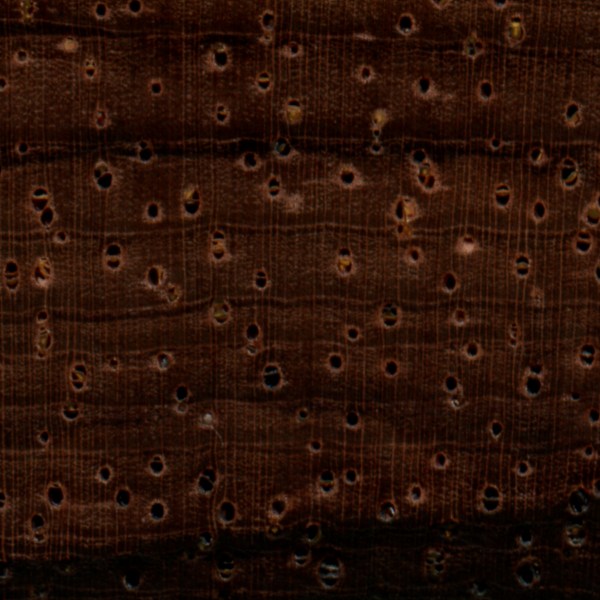
Dalbergia latifolia =East Indian Rosewood density 57 pounds per cubic foot

Diospyros crassiflora = Gabon Ebony density 65 pounds per cubic foot

Dalbergia retusa = Cocobolo density 69 pounds per cubic foot
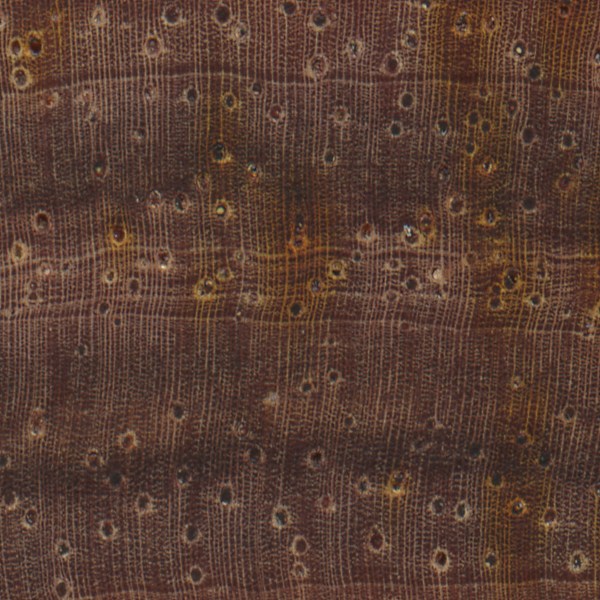
Dalbergia melanoxylon = African Blackwood density 79 pounds per cubic foot

Haters Hate to COEXIST
-
coffeecup
- Posts: 1367
- Joined: Tue May 20, 2008 4:15 am
Re: The Red Cross Holley & Camillus Big Mistake Xmass Hobo K
Dmitri, I'm looking at a water extract florescence test. There is a decent description of it at the site Jon_slider posted, here: http://www.wood-database.com/wood-artic ... rosewoods/ (Hmm. Can't seem to get it to link, you'll have to cut-and-paste that url.) It is only an exclusionary test, we can show a wood is not Brazilian rosewood but not what wood it is. For this though, that should be enough.
I'm not sure how big the sample has to be. I'm setting up to do some tests on that now, to figure out the minimum sample size we can use. I'm drying out some experimental samples and will convert them to dust before running the test, in hopes of making the heartwood extracts more available, so we can use a smaller sample size. I suspect we will still be looking at an amount about equal to a toothpick or matchstick in volume, but don't know yet.
Jon_slider, the problem with using visual differences, or things like specific gravity, is the small size of the sample pieces. If we had a piece big enough to get a 1"x1" cross-section, it would be a lot easier!
I'm not sure how big the sample has to be. I'm setting up to do some tests on that now, to figure out the minimum sample size we can use. I'm drying out some experimental samples and will convert them to dust before running the test, in hopes of making the heartwood extracts more available, so we can use a smaller sample size. I suspect we will still be looking at an amount about equal to a toothpick or matchstick in volume, but don't know yet.
Jon_slider, the problem with using visual differences, or things like specific gravity, is the small size of the sample pieces. If we had a piece big enough to get a 1"x1" cross-section, it would be a lot easier!
-
reddirtknives
- Posts: 1213
- Joined: Tue Nov 22, 2011 11:54 am
- Location: Okrahoma where the wind comes sreeping down the prain
Re: The Red Cross Holley & Camillus Big Mistake Xmass Hobo K
Sheesh Ccups, Why is it taking you so long to bust out a water extract florescence test? I would have had it completed by now
NOT!
Good Luck to You,
I would have had it completed by now NOT!
Good Luck to You,
DJ Red Tater Tip ~ Killer of Threads, Solo Pioneer in The Intergalactic Cutlery Trade
... ... `.~ RED DIRT KNIVES ~.` ... ...
... ... `.~ RED DIRT KNIVES ~.` ... ...
-
reddirtknives
- Posts: 1213
- Joined: Tue Nov 22, 2011 11:54 am
- Location: Okrahoma where the wind comes sreeping down the prain
Re: The Red Cross Holley & Camillus Big Mistake Xmass Hobo K
I was only kidding... I wouldn't even attempt such a thing... Interesting information though  Thanks fellas
Thanks fellas DJ Red Tater Tip ~ Killer of Threads, Solo Pioneer in The Intergalactic Cutlery Trade
... ... `.~ RED DIRT KNIVES ~.` ... ...
... ... `.~ RED DIRT KNIVES ~.` ... ...
-
reddirtknives
- Posts: 1213
- Joined: Tue Nov 22, 2011 11:54 am
- Location: Okrahoma where the wind comes sreeping down the prain
Re: The Red Cross Holley & Camillus Big Mistake Xmass Hobo K
Coffeebreak, Did you ever finsh the wood test or come to some sort of conclusion? I couldn't wait to ask any longer. I've been excited to find out for awhile now... 
DJ Red Tater Tip ~ Killer of Threads, Solo Pioneer in The Intergalactic Cutlery Trade
... ... `.~ RED DIRT KNIVES ~.` ... ...
... ... `.~ RED DIRT KNIVES ~.` ... ...
-
coffeecup
- Posts: 1367
- Joined: Tue May 20, 2008 4:15 am
Re: The Red Cross Holley & Camillus Big Mistake Xmass Hobo K
I'm obtained the lights needed. I've picked up the necessary glassware, several references, etc. I've worked out a consistent process for sample prep. I've run about 35 tests to determine minimum sample size.
I've conducted tests on 8 known 100 or so year old samples to make sure the test would still be valid on wood that has had 100 years of oxidation and chemical exposure. I've dug through my accumulation of wood covers from antique knives, and done some tests with those. (Interestingly, Remington seemed to possibly be using some plainer rosewood along with the cocobolo on some of their knives--or at least two of those samples didn't fluoresce--could be a lot of reasons for that though.)
In parallel, I've been gathering samples (both antique and more recent) of known woods from the various historical geographic sources for comparative purposes, and to prepare microscope slides so I can get enlarged photos for future reference. I don't know if these woods show a difference in appearance between "old growth" wood and the stuff being harvested more recently.
But the microscopy was just killing time while I search for a Red Cross knife I can sacrifice in order to obtain a sample of wood to test. That may take a while.
I've conducted tests on 8 known 100 or so year old samples to make sure the test would still be valid on wood that has had 100 years of oxidation and chemical exposure. I've dug through my accumulation of wood covers from antique knives, and done some tests with those. (Interestingly, Remington seemed to possibly be using some plainer rosewood along with the cocobolo on some of their knives--or at least two of those samples didn't fluoresce--could be a lot of reasons for that though.)
In parallel, I've been gathering samples (both antique and more recent) of known woods from the various historical geographic sources for comparative purposes, and to prepare microscope slides so I can get enlarged photos for future reference. I don't know if these woods show a difference in appearance between "old growth" wood and the stuff being harvested more recently.
But the microscopy was just killing time while I search for a Red Cross knife I can sacrifice in order to obtain a sample of wood to test. That may take a while.
-
citytransplant
- Posts: 15
- Joined: Mon Nov 14, 2011 12:40 am
Re: The Red Cross Holley & Camillus Big Mistake Xmass Hobo K
Here are a couple of shots of mine, which I've had for a few years now.
- Attachments
-
-
-
reddirtknives
- Posts: 1213
- Joined: Tue Nov 22, 2011 11:54 am
- Location: Okrahoma where the wind comes sreeping down the prain
Re: The Red Cross Holley & Camillus Big Mistake Xmass Hobo K
Coffeecups, your diligence amazes me. Meanwhile, I have decided to sell my Holley on the bay this week. Should be listed on Sunday around 8:15 Eastern time. I should have held on to my camillus because I would have gladly donated a chunk of the handle for your test. I sold it for $25 at the swap. I'll be on the lookout for another...
citytransplant, Nice example
citytransplant, Nice example
DJ Red Tater Tip ~ Killer of Threads, Solo Pioneer in The Intergalactic Cutlery Trade
... ... `.~ RED DIRT KNIVES ~.` ... ...
... ... `.~ RED DIRT KNIVES ~.` ... ...
-
reddirtknives
- Posts: 1213
- Joined: Tue Nov 22, 2011 11:54 am
- Location: Okrahoma where the wind comes sreeping down the prain
Re: The Red Cross Holley & Camillus Big Mistake Xmass Hobo K
Well I couldn't wait for coffeecup's test results… But I did learn that Ulster and Case also made these Redcross Big mistake knives.
DJ Red Tater Tip ~ Killer of Threads, Solo Pioneer in The Intergalactic Cutlery Trade
... ... `.~ RED DIRT KNIVES ~.` ... ...
... ... `.~ RED DIRT KNIVES ~.` ... ...