



case and rogers handle? any info?
-
becko
- Posts: 58
- Joined: Thu Jan 18, 2007 7:35 pm
case and rogers handle? any info?
i'm looking for info about what a rogers bone handle would be on possibly the 6254 model xx ? there's no sp at all - just the numbers-- i can't seem to find anything on it, but the price my grandfather had on this indicates it is special-- what is special about the rogers handle? how can you tell the difference? thank you so much for your help as always
-
DR_MAGOO
- Posts: 584
- Joined: Sat Mar 03, 2007 8:45 pm
ROGERS BONE
Rogers Bone (Rodgers)
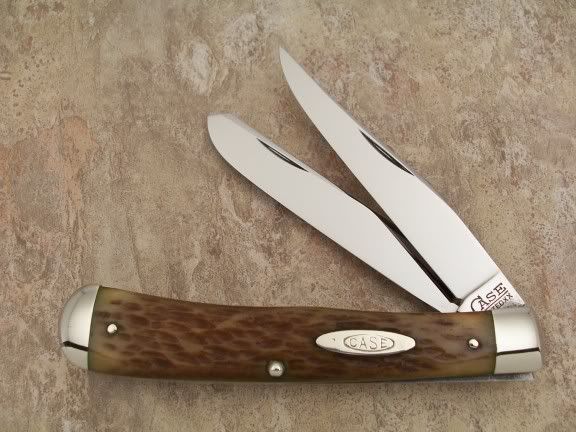
The Rogers Handle Company, destroyed by fire in 1956, originally produced Rogers bone. The company's jigging pattern was characterized by deep grooves that were rounded at the top to give the bone a smooth feel.
I obtained this information from Sheperd Hills Cutlery - Knife Dictionary (Authored by Shirley Boser) that they had on their web site in 2005.
Hope this has been some help.
The Rogers Handle Company, destroyed by fire in 1956, originally produced Rogers bone. The company's jigging pattern was characterized by deep grooves that were rounded at the top to give the bone a smooth feel.
I obtained this information from Sheperd Hills Cutlery - Knife Dictionary (Authored by Shirley Boser) that they had on their web site in 2005.
Hope this has been some help.
-
Blade Runner
- Posts: 1109
- Joined: Sat Feb 11, 2006 1:50 am
- Location: Gainesville Georgia
-
El Lobo

- Gold Tier

- Posts: 3036
- Joined: Tue Dec 14, 2004 4:47 pm
- Location: Arizona, right here in the U.S. of A.
That's a real nice knife Gary... 

Here is Rogers jigging on the 1994 NKCA knife done by Case.
Bill
Here is Rogers jigging on the 1994 NKCA knife done by Case.
Bill
- Attachments
-
- 1994 NKCA Pile Side.jpg (32.31 KiB) Viewed 2982 times
Please visit the Member Stores here at AAPK, including my store.....GET AN EDGE!
http://www.allaboutpocketknives.com/getanedge
http://www.allaboutpocketknives.com/getanedge
-
Blade Runner
- Posts: 1109
- Joined: Sat Feb 11, 2006 1:50 am
- Location: Gainesville Georgia
-
Blade Runner
- Posts: 1109
- Joined: Sat Feb 11, 2006 1:50 am
- Location: Gainesville Georgia


-
becko
- Posts: 58
- Joined: Thu Jan 18, 2007 7:35 pm
well i think this IS rogers afterall
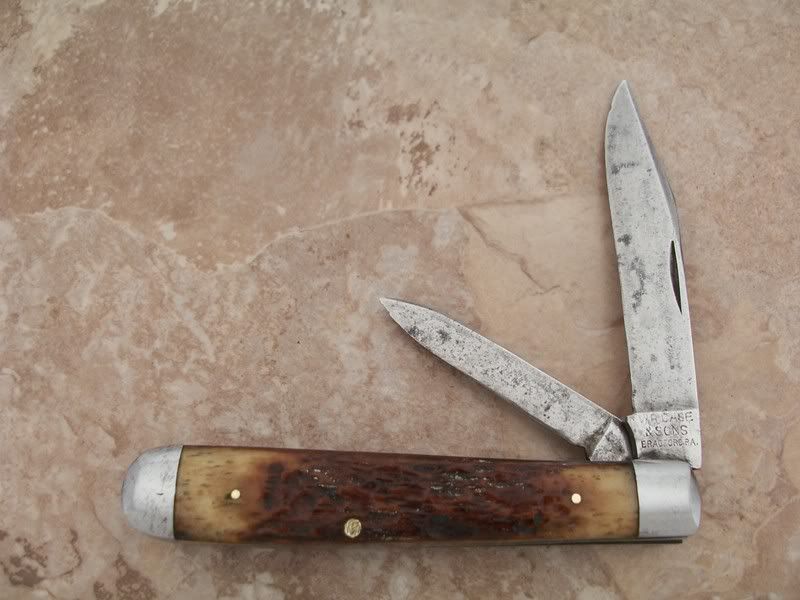
well this is why i was wondering! i'm pretty sure this is an early rogers handle-- i'm not sure if it is a regular xx frame or the first model- i can't quite tell on the bolster width etc- when i had asked i hadn't seen it yet , and any way i think the handle is gorgeous on this one.
- Attachments
-
-
becko
- Posts: 58
- Joined: Thu Jan 18, 2007 7:35 pm
gary
oh yeah gary i can see my bolster on the end is thicker than your tested era trapper which is gorgeous btw-- i would have thought it green bone though since the edges aren't lighter with burnt color in the middle-- -- i have several knives with that handle, and i thought they were green bone? I'm so confused on green bone. i think mine must be an early rogers regular xx frame-- so is the price far off? i don't know if the sticker is there because he bought it or was selling it-- i found a good tony foster knife world article that details the trapper stuff too from 1998- thanks all for your help- i think i know enough to list it at least in good faith- my case romance pink catalog's pic of rogers bone is identical to the one i have ( but it wasn't shown in a trapper in there)-- the regular xx frame isn't worth as much, but you and bladerunner and el lobo mentioned it was rare right? maybe it would even out- t hank you again so much! 
-
sunburst

- Posts: 2921
- Joined: Wed Nov 23, 2005 10:07 pm
- Location: The Scrublands of Central Florida
Rogers bone was made by the Rogers Manufacturing Company of
Rockfall, Connecticut.
1891, making manufactured bone products, and also bone fertilizer.
They began to make jigged bone pocketknife scales around the turn of
the century. Other manufactured bone products included combs,
toothbrush handles, baby pacifiers, and one of their biggest sellers,
corn-cob pipe bits. This particular item was discontinued in the
1950s.
Early in the century, one of this firm's competitors in the bone
business was Rogers & Hubbard. About the time of the First World War,
Rogers Mfg. Co. traded its bone fertilizer operation to Rogers &
Hubbard, and received in return the other firm's manufactured bone
products business. From that time forward, Rogers Mfg. Co. was the
nation's largest maker of manufactured bone products.
At first, all of the bone used by Rogers Mfg. Co. came from domestic
cattle. By the 1920s, and perhaps even earlier, all of it was coming
from overseas, mainly from Argentina.
Most of Rogers's pocketknife handle material was made in the
distinctive jigging pattern that collectors call "Rogers bone," but
that the firm in fact called "Rogers Stag." Rogers Stag was made
using a specially designed jigging machine which the company still
has, but that has not been used since 1962 (they have no interest in
starting it up again). They also made small quantities of other
styles of jigged bone for pocketknives.
Rogers Mfg. Co. also made jigged bone for hunting knives and for
kitchen utensils. For hunting knives, they made a style of jigging
they called "Indian Trail." This is a long random "worm" style of
jigging. Their biggest customer for bone kitchen utensil handles was
Landers Frary & Clark, who used the bone mainly on kitchen forks.
During the Second World War, Rogers's production of jigged bone
handles continued without interruption. Many of those handles wound
up on cutlery items made for the government.
The bone used by Rogers during the war was all imported. It came
from Argentina, Brazil, and a new source: Australia. The Australian
bone came mainly from old (15+ years old) tough range cattle, and so
was very thick and dense and strong. This heavy Australian bone was
used mainly for hunting knife handles.
In the 1950s, cost-conscious cutlery manufacturers began to
discontinue the production of bone handled pocketknives. Rogers Mfg.
Co. changed with the changing times, and began to offer synthetic
pocketknife handles. Mr. Bitel, who started with Rogers in 1955, was
involved in the transition. He states that Rogers Mfg. Co. was the
first firm to produce pocketknife scales made out of Delrin (a DuPont
acetal resin). One trademark Rogers used for synthetic handle
materials was Romco.
Rogers Mfg. Co. last sold bone pocketknife handle material in 1962.
The firm still supplies limited quantities of synthetic handle
material to the cutlery industry, but domestic and foreign competitors
have taken most of that specialized business away.
Rockfall, Connecticut.
1891, making manufactured bone products, and also bone fertilizer.
They began to make jigged bone pocketknife scales around the turn of
the century. Other manufactured bone products included combs,
toothbrush handles, baby pacifiers, and one of their biggest sellers,
corn-cob pipe bits. This particular item was discontinued in the
1950s.
Early in the century, one of this firm's competitors in the bone
business was Rogers & Hubbard. About the time of the First World War,
Rogers Mfg. Co. traded its bone fertilizer operation to Rogers &
Hubbard, and received in return the other firm's manufactured bone
products business. From that time forward, Rogers Mfg. Co. was the
nation's largest maker of manufactured bone products.
At first, all of the bone used by Rogers Mfg. Co. came from domestic
cattle. By the 1920s, and perhaps even earlier, all of it was coming
from overseas, mainly from Argentina.
Most of Rogers's pocketknife handle material was made in the
distinctive jigging pattern that collectors call "Rogers bone," but
that the firm in fact called "Rogers Stag." Rogers Stag was made
using a specially designed jigging machine which the company still
has, but that has not been used since 1962 (they have no interest in
starting it up again). They also made small quantities of other
styles of jigged bone for pocketknives.
Rogers Mfg. Co. also made jigged bone for hunting knives and for
kitchen utensils. For hunting knives, they made a style of jigging
they called "Indian Trail." This is a long random "worm" style of
jigging. Their biggest customer for bone kitchen utensil handles was
Landers Frary & Clark, who used the bone mainly on kitchen forks.
During the Second World War, Rogers's production of jigged bone
handles continued without interruption. Many of those handles wound
up on cutlery items made for the government.
The bone used by Rogers during the war was all imported. It came
from Argentina, Brazil, and a new source: Australia. The Australian
bone came mainly from old (15+ years old) tough range cattle, and so
was very thick and dense and strong. This heavy Australian bone was
used mainly for hunting knife handles.
In the 1950s, cost-conscious cutlery manufacturers began to
discontinue the production of bone handled pocketknives. Rogers Mfg.
Co. changed with the changing times, and began to offer synthetic
pocketknife handles. Mr. Bitel, who started with Rogers in 1955, was
involved in the transition. He states that Rogers Mfg. Co. was the
first firm to produce pocketknife scales made out of Delrin (a DuPont
acetal resin). One trademark Rogers used for synthetic handle
materials was Romco.
Rogers Mfg. Co. last sold bone pocketknife handle material in 1962.
The firm still supplies limited quantities of synthetic handle
material to the cutlery industry, but domestic and foreign competitors
have taken most of that specialized business away.
“The farmer is the only man in our economy who buys everything at retail, sells everything at wholesale, and pays the freight both ways”
-
Blade Runner
- Posts: 1109
- Joined: Sat Feb 11, 2006 1:50 am
- Location: Gainesville Georgia
-
becko
- Posts: 58
- Joined: Thu Jan 18, 2007 7:35 pm
yeah sure gary I will-- Both my thumbs have bandaids on at the moment ouch-what do you think it is an example of? the romance book's example of rogers bone stag looks exactly like this maybe it is not early rogers but a later rogers in the 50's?-- does anyone have the romancing case collecting book I'm referring to- it's bright pink-- it's in there under the handle color pictures- I will take a pic of the page in the book-- My pink case book says sometimes this is referred to as honeycomb? I will get some pics of the blades and shield- the shield looks like an xx shield with the open C- gary are you the writer of the article on this site written for knife world just wondering ? I also found an article by Tony Foster which helped me -- the pics were not in color however. Okay thanks I may just go to a gun knife show and ask around.