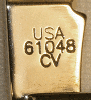
Butcher knives like these were virtually unchanged from the early 1800's until say, the 1960's, when some newer variations, especially handles, started coming out. I know that in the 1960's I could walk into a hardware store anywhere and they were loose on the shelves in the three time honored blade styles: the upswept skinner with plenty of belly, the thin boner, in both straight and upswept versions, and the butcher, like yours. In recent years they have become popular with rendezvouers and black powder mountain man types, which would be historically accurate. People make their own sheaths. In the 19th century, if your knife was inside of a shed or building, it was a butcher knife. If you walked outside with it, it was a hunting knife. Buffalo hunters bought them in barrels of one to five hundred knives. The design was probably fairly mature even back in the 17 and 1600's. It may have been the original model T Ford in terms of the earliest products of the assembly line. In recent decades, butcher knives as used in the home and packing houses often exhibit synthetic handles. This largely arose as a desire for antibacterial safety, but sporting knives had already taken off in this direction. Turns out that the wooden handles, and wooden cutting boards are both more hygienic. You can read all about that in one of Bernard Levine's links over on BladeForums. Here is the page:
http://www.knife-expert.com/cut-bo93.txt










 Well not bad for $5 bucks has a great edge and feels very bushy